Dare to say NO to Dairy?

Dare to say NO to Dairy Part 1: Dispelling the Myth

Ever since I can remember, I remember being taught that dairy was an important part of a healthy diet. "Drink milk to build strong bones", mothers have been telling their children for decades. After that, "drink milk to prevent osteoporosis". Celebrities flaunting their milk mustaches and lean figures further drive home the notion that dairy is nature's perfect health food... It is, right? The FDA food pyramid recommends consuming 3 or more dairy products a day... But is that recommendation really in our best interest? I am one of a growing many who think the answer to that question is a resounding "no".

The most well-accepted potential health benefit of dairy products is bone health. However, if one goes into the literature, most studies that attempt to find such a correlation come up short. In fact, a surprising number of studies demonstrate the opposite- that increased consumption of dairy actually increases risk for osteoporosis and bone fracture [1]. In 2005, a review of 58 previously published studies concluded
    "In clinical, longitudinal, retrospective, and cross-sectional studies, neither
     increased consumption of dairy products, specifically, nor total daily
     calcium consumption has shown even a modestly consistent benefit for
     child or young adult bone health."
Furthermore, it seems that supplementation of calcium has little to no benefit on bone health, either. So, if the calcium in milk doesn't build strong bones, what does?

People often think of bones like rocks- bones are about as hard as rocks, and their kind of easy to forget about because we typically don't see them. However, bones are very much alive and are always remodeling- they say you make a new skeleton every 10-12 years! This process of bone break down and bone formation is orchestrated by two types of bone cells- osteoblasts and osteoclasts. Osteoblasts are the guys that make new bone, osteoclasts destroy old bone to make room for the new stuff.

Bone health and disease isn't solely dependent on how much calcium we take in- actually, most of us get more than we really need, yet our rates of osteoporosis are staggering in this country. Bone mineralization is also dependent on the ratio of osteoblast/osteoclast activity, as well as how much calcium we absorb and excrete. Both of these processes (cellular activity and mineral retention and absorption) are dependent on hormones, namely parathyroid hormone and calcitonin, a hormone made in the thyroid gland. Additionally, the body's ability to absorb calcium from the food we ingest can be hindered by things like hormone imbalances, leaky gut syndrome and food sensitivities, a change in the gut's good and bad bugs, and inflammation.

More lately than ever, research is pointing us toward a new model of osteoporosis: Inflammation. An acidic bodily environment (inflammation) increases the rate of calcium excretion in the urine. This can  be caused by a multitude of unhealthy lifestyle choices such as smoking, drugs, eating unhealthy food, and drinking soft drinks and caffeine. So, for those of you who think you're preventing osteoporosis by taking that calcium supplement in the morning and still engaging in an otherwise unhealthy lifestyle, I've got news for you: You just have really expensive urine!

So why would eating dairy cause more bone loss, as in the studies mentioned in Whitewash? This may be partially because animal protein in general is very acidic. Increased consumption of animal protein (including dairy) has been linked to an increase in bone fractures and osteoporosis, and is thought to contribute to the inflammatory environment described above. More and more we are seeing that health comes down to a healthy lifestyle, not a pill or a supplement for each and every disease. Take the steps in your life today to ensure you are healthy tomorrow.

To be continued.....

Nikki
(Side note: Common does NOT equal normal!)
[1] Joseph Keon, "Whitewash: The disturbing truth about cow's milk and your health" 2010
[2] Lanou, A "Dairy products and bone health in children and young adults: A reevaluation of the evidence," 115 Pediatrics (2005): 736-43
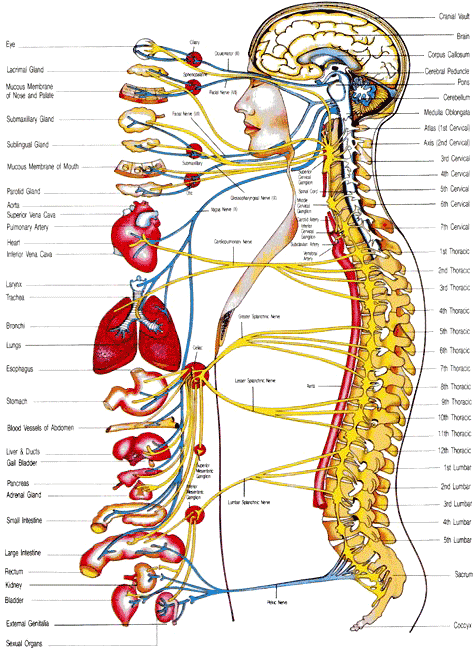
Functional Neurology

Chiropractors have been boasting for years that we are neurology specialists- that we treat the spine, and therefore the nervous system. One classic explanation for this is because an important part of the central nervous system, the spinal cord, lies within the spinal canal that goes through each vertebrae. Another commonly used explanation for this is that subluxation, that "bone out of place" that chiropractors adjust, can put pressure on the spinal nerves and obstructs nerve flow or vital force that goes to each target organ. And while both of those theories may be true to some extent, there seems to be a better explanation, however.
More recently (since about the 80s or 90s) as our understanding of neurology has advanced, so has our understanding of chiropractic's affect on the nervous system. Simply put, adjustments are felt by the patient, which means that they are somehow sensed and interpreted by the brain. Depending on the location of the adjustment, the type of adjustment, or the timing of the treatment, the brain will interpret that information a different way. This also calls attention to the very real, but all too forgotten reality that everything in our lives provides different stimulation to our brains. Whether it be the food we eat, the sensory information from our feet, or the thoughts we think, everything is perceived by the big guy upstairs- whether we are consciously aware of it or not. Furthermore, the brain has the remarkable ability to adapt to the stimulation it recieves- or as we in the biz call it, neuroplasticity. This is the basis for neurological stimulation such as what we use in functional neurology. As the weak circuitry is stimulated, the pathways are strengthened and allowed to operate more smoothly.
As a clinician who wants to help the more "complicated" patients out there, I find it will be especially important for me to know not only how the body affects the brain, but how the brain affects the rest of the body. This is why I have chosen to study chiropractic neurology (also called functional neurology). Functional neurologist take extensive classwork in addition to their chiropractic degree coursework to further understand the nervous system. To get a diplomate in functional neurology one must complete a minimum of 300 hours of additional coursework in neurology and pass a rigorous clinically oriented test. Many chiropractic neurologists are also well versed in functional medicine- another critically important skill set when treating the so called "complicated" patients that are becoming increasingly common now.

Chiropractic neurology has received a lot of press in the last few months, mostly because of Dr. Ted Carrick's work treating hockey star Syd Crosby. Since then, Carrick and functional neurology has seen a lot of positive press, as well as a lot of skepticism. For example, one particularly rude reader commented on an article about Crosby that "last he knew, concussion was not caused by a subluxation"... And I agree, but we never claimed that it was! When applied in a specific way that is unique to the patient's neurological needs, chiropractic adjustments can be a very powerful and effective way to stimulate the brain. Furthermore, functional neurologists such as Carrick use a variety of treatments in conjunction with their adjustments including eye exercises, as well as balance and coordination exercises. That poster's comment not only reveals a clear lack of understanding of basic neurology and neuroplasticity, but an unawareness of what chiropractic neurology is all about!

Chiropractic neurology helps the brain function at it's very best. Certainly anybody could benefit from chiropractic neurology, but it is particularly great for people with neurological disease or symptoms. If you know of someone who's brain is not functioning at it's best, finding a qualified chiropractor near you may make a world of difference in that person's life. I encourage you to go on the American Chiropractic Neurology board's website and find a chiropractic neurologist near you!

Passionately helping others,

Nikki


Resources!
Doctor locator-
http://acnb.org/doctor-locator

More on Crosby and Carrick-
http://video.ca.msn.com/watch/video/inside-hockey-sidney-crosby/16atihz31
http://prohockeytalk.nbcsports.com/2012/01/16/crosby-to-see-chiropractic-neurology-specialist/

More about Functional Neurology in the press-
http://vimeo.com/47787677 (recently on ABC's nightline)

Trailer and information about the functional neurology movie  Hope Restored-
http://www.myhoperestored.com/

A fun read on neuroplasticity and changing your thoughts for the better-
http://www.mysticmusingsandmeditations.com/2010/03/is-it-really-possible-to-rewire-your-brain-7-days-to-a-new-positive-you/

Diabetes: There's a New Kid on the Block

In today's day and age, it's hard to find someone who hasn't either known someone with diabetes or had it themselves. Diabetes affects 25.8 million Americans, or 8.3% of the US population [1].

Type 1 diabetes is an autoimmune condition that leads to destruction of the insulin secreting cells in the pancreas. Once enough of the pancreas is destroyed and they lose the ability to make insulin, these patients become dependent on insulin injections. Type 1 diabetics are generally diagnosed in childhood, and thus it is often called "juvenile" or "insulin dependent" diabetes. Type 1 diabetics makes up approximately 10-15% of the diabetic population in the US [2].

Type 2 diabetes is generally diagnosed later in life, and is the so-called "adult onset" diabetes, although with so many children being diagnosed now we are moving away from this terminology. Type 2 diabetes is caused by cellular resistance to the hormone insulin, and is completely mediated by dietary and lifestyle choices. Changing your dietary and lifestyle habits can reverse type 2 diabetes. For example, exercise stimulates insulin receptors on cells, and helps reverse the "insulin resistance" that is the fundamental pathophysiology of this disease. Type 2 diabetics make up the remaining 90% of those diagnosed with diabetes [2].


Research is now showing that there is a third form of diabetes what they are calling "type 1.5 diabetes", AKA "Latent Autoimmune Diabetes in Adults", or LADA. Most of the time these patients are misdiagnosed as having type 2 diabetes because of the timing of their diagnosis (adulthood). However, the disease process in LADA is closer to that of type 1 diabetes- it is also autoimmune. It has been estimated that anywhere from 2-20% of type 2 diabetics actually have LADA, making is about as common as type 1 diabetes [2]. These numbers vary from population to population, and to my knowledge there has not been any data on the percentages in the US.

Features of LADA that may help set it apart from type 2 diabetes include: [3]
1. Age of onset < 50 years (and usually >30)
2. Acute symptoms (increased thirst, increased urination, unintentional weight loss)
3. Body Mass Index (BMI) below 25 (normal body weight)
4. Personal history of another autoimmune disease
5. Family history of autoimmune disease

In a prospective study, the presence of at least two or more of these clinical features had a 90% sensitivity and 71% specificity for identifying LADA [3]. In other words, 90% of those with LADA were accurately identified according to these criteria, and 71% of people with at least two of these criteria did, in fact, have LADA.

Diagnosis of LADA relies on identifying GAD Antibodies, which is the single best marker for screening. While other pancreatic anti-bodies may be involved in LADA, GAD Ab testing shows a 76% sensitivity and 95.7% specificity at detecting LADA [3]. In other words, 95.7% of those who tested positive for GAD Abs had or will develop LADA, and 76% of those with LADA were GADA+. Other antibodies include islet cell Abs, Insulin Abs, and islet antigen 2 Abs.

But why is LADA not being screened for on a more regular basis... or at all? I would personally venture to guess that if you asked most doctors about LADA they wouldn't even know that it existed! The sad reality is that this diagnosis often has little clinical relevance to most doctors: They have no tools in their tool box to slow the progression of the autoimmune attack, so treatment is often unaffected by this diagnosis. As such, at this point in time it is not recommended in routine management of adult diabetic patients [3]. The recommended medical treatment for LADA is early insulin administration to help preserve beta cell function. Also, because of it's tenancy to further exhaust beta cells, sulfonylureas are not recommended for LADA patients [3].

Those of you who have been following my posts know that there is a LOT one can do to calm down the immune system and slow an autoimmune process. Things like eliminating dietary allergens, getting proper sleep, exercising, and boosting antioxidants such as glutathione and curcumin, and boosting vitamin D levels do wonders for the immune system and can help slow the progression of autoimmune diseases.

If anyone you know fits the above profile and is interested in getting screened for LADA, find a functional medicine doctor who is able to run tests by Cyrex labs. This lab has an autoimmune diabetes blood test that tests GAD, insulin and islet cell antibodies and is the best way available tool to properly diagnose LADA. I run Cyrex tests in my office in Tempe, Arizona. For more information my office can be reached at
(480) 280-3943 or you can visit my website at DrNicoleDiNezza.com.

In health, 

Nikki

References:
[1] http://diabetes.niddk.nih.gov/dm/pubs/statistics/#fast
[2] Brahmkshatriya P et al "Characteristics and prevalence of Latent Autoimmune Diabetes in Adults (LADA)" ISRN Pharmacology 2012 (PMID 22577577)
[3] Poudel R et al "Latent autoimmune diabetes of adults: from oral hypoglycemic agents to early insulin" Indian J of Endocrinol Metab 2012 March; 16 (PMID 22701843)

Solutions for a soda-less life

Bottom line: You've known all along that soda is bad for you.


Everybody knows that soda is terrible for you- it's not rocket science. Yet millions of people drink gallon after gallon of soda every day. So where is the disconnect, here?

The reality is that people won't change until they see the value in that change. Unfortunately, it's all too easy to focus on the here and now, and ignore the future consequences of our actions because they're not tangible yet! In the example of the soda drinker, the benefit (taste) of the sugary soda somehow outweighs the potential health problems in the future, making it harder to find the motivation to change that negative behavior. That is part of my goal with this blog- to bring attention to the future that you are molding for yourself each and every day so that you can no longer forget about it. People place little value on the intangible, distant future until you make it a reality for them today.

The other problem I see with trying to get soda drinkers to kick the habit is that their taste buds have grown accustomed to that level of taste stimulation. I have heard many, many friends and patients complain that they "just can't drink plain water"- "it tastes so plain!"

Taste can be a very real addiction- your taste buds (and brain) have literally become desensitized to what things should taste like after a while. After your taste buds get used to the amount of sugar and salt in soda, everything else will taste especially bland. The good news is that the brain (and taste buds) can and WILL mold to their new environment, and soon you will see that things you once thought were bland actually have quite a bit of flavor! The key is to work our way back to water gradually so you don't go completely insane.

Here are some ideas for soda replacements-

1. While soda in and of itself is NOT HEALTHY, one baby step may be trying stevia flavored soda, Zevia. Again, this is by no means a health food, but it's a step in the right direction on the way back to drinking plain water.

2. Try infusing water with different herbs and fruit- for example, put a little fresh mint and some fresh strawberries in cold water and let sit for a day or two in the fridge. For other recipes and ideas, this website looks like it has some good ideas, or you can try a simple google search for recipes for infused water.


3. A little lemon in water goes a long way. You can also try brewing some green tea, chilling it, and drinking cold with a little bit of lemon. Get creative!

4. Watered down, real juice may serve as another good stepping stone on your way back to drinking water, but beware of many processed juices. Juice "cocktail", etc is usually code for "this product has almost no real juice, and is mostly just high fructose corn syrup and coloring".

5. Again, water is obviously the ultimate goal and should be the source of 90+ percent of your fluids.

Here are some things I personally would encourage you to NOT replace soda with:

1. Milk and milk products. For health concerns I will describe in another post, I personally do not endorse dairy consumption for most people.

2. Juice and juice coctails are sugar-ridden and should be avoided. At least if you eat real fruit you will get the fiber and additional nutrients from the food, but juice is not as healthy as many seem to think it is.

3. Gatorade is almost as bad as soda- it's basically salt water loaded with sugar. While many athletes seem to like it, I think there are healthier ways to replace electrolytes while you work out. Also, I would say that 75% of people I see drinking Gatorade are not actually working out, but they try to pass it off as juice, and therefore a health food. Don't be fooled- Gatorade is not juice, and it is not healthy.


I hope this gives you all a fun starting point to jump into your new soda-free life! Shape your future today, and take charge of your health!

Nikki

Artificially Sweet: The Truth about Aspartame

Aspartame (also known as Nutrasweet or Aminosweet) is a popular sugar substitute that is commonly found in "diet" foods and beverages, most notably, diet soda. Since it's discovery in 1965 and debut into the food supply in 1982, aspartame has made its way into an estimated 6,000 products including baby food, chewable multivitamins, powdered beverage mixes, toothpaste, frozen meals, soda, and gum (1). Currently aspartame is considered to be safe as a non-nutritive sweetener by the FDA, but in the last twenty years there has been much debate over its safety.

The term "non-nutritive sweetener" is an inaccurate way to describe aspartame- non-nutritive implies that the substance passes through the digestive tract unchanged. However, aspartame is readily absorbed and metabolized in the human GI tract into it's three components: phenylalanine, aspartic acid (aspartate), and methanol. Each of these components have their share of bad press, which adds up to one dangerous artificial sweetener. Don't believe me? Read on, dear reader...

Aspartame has has the reputation for being a carcinogen (cancer causative agent) for quite some time, mostly due to the fact that 10% of it's byproduct, methanol, is metabolized to form formeldahyde, a known human carcinogen. However, studies to prove or disprove aspartame's role in cancer have thus far been largely unclear. In 2006 a "mega-experiment" was performed on 1,800 rodents, in which the animals were given various doses of aspartame in their chow from the age of eight weeks until natural death (4). That last part is of crucial importance- All the other studies that were done until that point were done on rodents that were sacrificed (killed) between 104 and 110 weeks of age, which corresponds to about 2/3 of the animals' lifespan. This is important because approximately 80% of human cancers (and animals) are diagnosed in the last 1/3 of the lifespan (5)- so in all the other experiments they were killing the animals before the cancer would have had a chance to develop! In this study the authors found an increase in cancers of various types in doses as low as 400 ppm, which is equivalent to 20 mg/kg body weight. The FDA's acceptable daily intake for aspartame is currently set to 50 mg/kg in the United States and 40 mg/kg in Europe- nearly twice the dose seen to increase cancer risk in this study. Here are the authors comments on their results:
    "The results of this mega-experiment indicate that APM (aspartame) is multipotential
      carcinogenic agent, even at daily doses of 20 mg/kg body weight, much less than than
     currently acceptable intake. On the basis of these results, a reevaluation of the present
     guidelines on the use and consumption of APM is urgent and cannot be delayed."(4)

Artificial sweeteners are commonly seen in "diet" and diabetic friendly foods- everything from diet soda to frozen "diet" dinners. However, there is a large body of evidence that shows a correlation between artificial sweetener use and weight gain (2). Sweet taste enhances human appetite, regardless of caloric value. Actually, the authors of the study I am now referencing go on to say that "inconsistent coupling between sweet taste and caloric content can lead to compensatory overeating and positive energy balance" (2). They believe this is because of the disruption between the two ways our brains interpret food reward. The first starts in the taste buds, then the sweet taste sensory stimulation is perceived by the brain. This is called the sensory part of the food reward. The second part (the postingestive food reward pathway) depends on the metabolic products of the food, which is ultimately relayed to the hypothalamus, the part of the brain that controls the autonomic nervous system. It has been shown that artificial sweeteners do not activate the postingestive pathway, thus giving your brain two conflicting signals about what it just ate. This just goes to show ya, you can't outsmart the body. Furthermore, because of the increased carbohydrate cravings and subsequent weight gain resulting from aspartame ingestion, "aspartame is believed to cause problems in diabetic control" (3). 

(Nikki's note: I personally don't recommend you drink milk either!.. More on that another time.)

For those of you who don't mind the occasional tumor or diabetes, perhaps the effects aspartame might have on your brain will be the one to tip the scale for you. A recent study in the journal of Drug and Chemical Toxicology (1) demonstrated that aspartame significantly reduces the amount of glutathione (remember that really important antioxidant?) and glutathione reductase (the enzyme that "recycles" glutathione) in the rat brain. Granted, this particular study did use a much higher dose than say, the cancer study, but I personally wouldn't want to chance decreasing my precious glutathione.
    "The results of this study indicate that long-term consumption of aspartame leads to an
      imbalance in the antioxidant/pro-oxidant status in the brain, mainly through the
      mechanism involving the glutathione-dependant system." (1) 
In another study the authors found that samples of rat brain tissue that were damaged by aspartame were completely or partially restored to normal upon incubation of glutathione or L-cysteine (a glutathione precursor) (6). A different study outlined the various ways aspartame interferes with normal neurotransmitter synthesis and function (3). Neurotransmitters that may be effected by aspartame include serotonin (most famous for it's role, or lack there of, in depression), dopamine (decreased in Parkinson's disease), acetylcholine (Alzheimer's), and norepinephrine. So, not only does aspartame cause generalized inflammation and depletion of antioxidants in the brain, but it can lead to a multitude of neurological symptoms via it's effects on numerous neurotransmitters.

To add insult to injury, most processed foods have more than one artificial dye or sweetener in them. Several studies have looked at the synergistic effects of artificial sweeteners with each other and artificial colors. In 2006 a study found "significant synergy" between MSG and the food dye Brilliant Blue in various proportions, as well as aspartame and Quinoline Yellow. All four substances decreased neurite outgrowth on their own, but seemed to have a more profound effect when used together (7). Another study looked at the combined effects of MSG and aspartame on disruption of glucose homeostasis (blood sugar regulation) and found that the two did indeed work together (8). Again, both substances increased fat deposition and insulin resistance on their own, but the effects were magnified when the two acted together.

Many skeptics will say that these results are not convincing because they are almost exclusively based on animal (rodent) studies. I agree- humans and rodents are different. For instance, it has been shown that (because of enzymatic differences) test animals are 60 times less sensitive to phenylalanine, 10-20 times less sensitive to methanol poisoning, and 8-10 times less sensitive to aspartic acid and glutamate than us humans (3).

I hope that I have convinced you all to avoid artificial sweeteners, particularly aspartame. Friends, don't be surprised if i take that diet soda away next time we hang out together!


Nikki

References:
(1) M Abhilash "Long-term consumption of aspartame and brain antioxidant defense status" Drug and Chemical Toxicology 2012 (PMID: 22385158)
(2) Yang Q "Gain weight by "going diet?" Artificial sweeteners and the neurobiology of sugar cravings" Journal of biology and medicine 2010 (PMID: 20589192)
(3) P Humphries "Direct and indirect cellular effects of aspartame on the brain" European Journal of Clinical Nutrition 2008 (PMID: 17684524)
(4) Soffritti M "First experimental demonstration of the multipotential carcinogenic effects of aspartame administered in the feed to sprague-dawley rats" (PMID 16507461)
(5) Mead, N. Sour findings on popular sweetener, Enviromental Health Perspectives 2006 vol 114 number 3 pg 76
(6) Simintzi I "L-Cysteine and glutathione restore the modulation of the rat frontal cortex Na+, K+ ATPase activity induced by aspartame metabolites" Food and Chemical Toxicology 46 (2008) 2074-2079 (PMID: 18343556)
(7) Lau K "Synergistic interactions between commonly used food additives in a developmental neurotoxicity test" Toxicological Sciences 2006; 90(1) 178-187 (PMID: 16352620)
(8) Collison KS "Interactive effects of neonatal exposure to MSG and aspartame on glucose homeostasis" Nutrition and Metabolism (London) 2012 June 14;9(1):58 (PMID: 22697049)

Alzheimer's Disease: An Ounce of Prevention

Ben Franklin said it best when he said "an ounce of prevention is worth a pound of cure". This is especially true of Alzheimer's Disease (AD). There is overwhelming evidence that the neurofibrillary tangles and beta-amyloid plaques (AB) seen in AD are not a cause, but an effect of the disease process. Similarly, there is evidence that AB deposits themselves are not a signature of neurotoxicity, per se, but of oxidative imbalance and an oxidative stress response in the brain (1).


The reason we haven't been able to find a cause for AD is because there is no cause... Or rather, there is no one cause. AD is a multifactorial disease, each case having it's own causative factors and unique set of symptoms and story. The real kicker is that inflammatory diseases like AD actually cause changes in gene expression and protein function and further perpetuate the inflammatory state. In other words, the inflammation seen in AD can be induced by numerous things by our environment and then maintaned by the body without any further insult, creating a vicious cycle.

So, my friends, the time to act is now. Not tomorrow. Not next week. Right now.
I have already written about ways to reduce your inflammatory burden (ex: losing weight). Let's talk about what we can do to try to shut off the vicious cycle and get rid of the inflammation we already have.. Of course, all of these supplements would be great for someone who already has AD, but they will be the most effective and protective in people who are not yet afflicted with the full-blown disease.

Inflammation is mediated by many receptors, proteins and enzymes. One example of such a receptor is RAGE, the receptor for advanced glycation end-products. The most well known AGE today is HbA1C, the marker for glycosylated hemoglobin used to track blood sugar in diabetic patients. HbA1C is a marker of inflammatory stress and high AGEs, and therefore the higher your HbA1C, the more critical it is that you get that blood sugar under control. RAGE has been implicated to play an important role in AD.

Interestingly, all of these pathways eventually feed back into one major loop that is mediated by the Nuclear Factor Kappa Beta (NF-KB). For example, RAGE triggering leads to activation of NF-KB and it's pro-inflammatory signals, which in turn stimulates RAGE and leads to a vicious cycle of inflammation (2). The major inhibitor of NF-KB is NRF-2, known as the keeper of redox homeostasis. Therefore, effective methods to get the core of inflammation would and should include foods and supplements that 1. stimulate NRF2 2. Inhibit NF-KB and 3. Boost antioxidants such as glutathione.

Curcumin, a component of the yellow curry spice tumeric, is a hot topic these days- and it's no wonder why. Not only is curcumin a NF-KB inhibitor, but it has several neuroprotective effects that make it uniquely suited for the prevention of AD. Among it's many antioxidant and protective effects, curcumin has been shown to bind AB and increase it's uptake by white blood cells (3), making it an enticing treatment for AD. Curcumin has been shown to be a potent free radical scavenger- more so than vitamin E. Curcumin has been shown to chelate metals such as Iron and Copper, excess of both of which have been implicated in the pathogenesis of AD (4). Unfortunately, curcumin has relatively low bioavailability on it's own. There are quality products available today that are readily absorbed (I personally like the one from Apex Energetics), but these products need to be ordered by a physician. Many functional medicine doctors are familiar with this company and can help you determine if this product is for you (it is). : )

Resvertrol, a flavanoid in red wine, has been shown to have many effects similar to curcumin. Resvertrol is a potent inhibitor of the NF-KB pathway, and it has been shown to increase the clearance of AB (4). It also protects DNA, decreases cell death, and decreases inflammation. Resvertrol is also not very bioavailable on it's own, but like curcumin, there are products available today that are better absorbed by the body.

Omega-3 fatty acids (fish oils) are another hot topic in nutrition these days. Generally, omega-3s are known to decrease inflammation, but one particular omega-3, DHA, has been shown to be especially neuroprotective. DHA has been shown to stimulate transthyretin, a protein possibly involved in the clearance of AB (4).

EGCG, the major component of green tea flavanoids, is another great source of antioxidants that may show particular benefit in AD. EGCG has been shown to chelate iron and copper, function as an antioxidant, and elevate and up-regulate enzymes that produce other antioxidants such as superoxide dimutase and catalase (4). Green tea is a great, easy way to get antioxidants into your daily routine. To get the most out of your green tea (and make it taste WAY better), check out this website for green tea brewing tips: http://www.thefragrantleaf.com/brewingtips.html

Glutathione is the body's most important antioxidant- particularly in the brain. Glutathione is also critically important in detoxification in the liver, so anyone who has or is taking a lot of drugs (medications or illegal) or alcohol should consider boosting their stores. While the body does make it's own glutathione, taking precursors such as N-Acetyl Cysteine can help give you a boost in times of stress. Quite frankly, in the world we live in now I think we are literally surrounded by stressors and should be taking some of this every day. Naturopathic doctors (NDs) may offer IV glutathione in their practices, which is a great way to get a boost of this important antioxidant (as long as you're not afraid of needles, that is)..


There are many, many supplements that are being studied for their benefits in AD... Honestly, this is just the tip of the iceberg! Of course, I know nobody wants to take a zillion pills a day, weather they be medications or supplements, so this list is the ones I deem the most important and effective at this time.

May your oxidants be neutralized, followers!

Nikki

Resources:
(1) Siddharatha Mondragon-Rodrigues et al "Causes versus effects: the increasing complexities of Alzheimer's disease pathogenesis" Expert Rev Neurother 2010 May; 10(5): 683-691 (PMID: 20420489)
(2) Lorena Perrone "The complexity of sporadic Alzheimer's Disease pathogenesis: the role of RAGE as a therapeutic target to promote neuroprotection by inhibiting neurovascular dysfunction" Int J of Alzheimer's D March 11, 2011 (PMID: 22482078)
(3) Dumont Magali "Mitochondria and antioxidant targeted therapeutic strategies for Alzheimer's Disease" J Alz Dis 2010; 20(2) (PMID: 20421689)
(4) Ramesh Balenahalli et al "Neuronutrition and Alzheimer's Disease" J Alz Dis Jan 2010; 19(4): 1123-1139 (PMID: 20308778)

Special note: I have started including citations with a PubMed ID number, PMID. Now all you have to do to read my references (or at least the abstracts), is go to pubmed.gov and type the PMID number in the search field!

Alzheimer's Disease: Current Medical Treatment

As we have discussed before, the best way to fix Alzheimer's Disease (AD) is to not get it in the first place. There is no cure for Alzheimer's Disease, but two classes of drugs have been approved by the FDA to treat the cognitive decline seen in AD. However, as I am about to show you, their effectiveness is questionable.

There are two types of drugs that are FDA approved to treat AD, cholinesterase inhibitors and namenda (1). Lets examine them both.

Cholinesterase inhibitors act by slowing down the re-uptake of a neurotransmitter (acetylcholine) by nerve cells, allowing it act on the neuron for a longer period of time. in 2005 a meta-analysis was done on 22 clinical trials of cholinesterase inhibitors to investigate the effectiveness of this class of drugs in AD patients. The conclusion of the study was:
"CONCLUSION: Because of flawed methods and small clinical benefits, the scientific basis for recommendations of cholinesterase inhibitors for the treatment of Alzheimer's disease is questionable." (2)
The authors go on to state that doctors often argue that CI's are beneficial in approximately 10-20% of patients with AD, and that since this sub-group can not be identified before treatment that every patient with AD should be treated. The authors make a good point and argue that perhaps further research should be conducted to help identify that sub-group, rather than medicate every AD patient with drugs that (like all drugs) can cause dangerous side-effects. I think they make an excellent point- why do those 10-20% of people respond to this class of drugs, and how can we identify them in advance? This would cut the cost of AD medications by- oh wait, that's why there's no pharmaceutical sponsored research on this. We wouldn't want to cut down on drug costs, now would we?

Namenda is a class of drugs that are NMDA-receptor antagonists. In 2011 a meta-analysis was conducted that evaluated three clinical trials on Memantine (Namenda) in over 1,000 patients with mild to moderate AD. Their conclusion was similarly unimpressive:
"CONCLUSIONS: Despite its frequent off-label use, evidence is lacking for a benefit of memantine in mild AD, and there is meager evidence for its efficacy in moderate AD. Prospective trials are needed to further assess the potential for efficacy of memantine either alone or added to cholinesterase inhibitors in mild and moderate AD." (3)

Would you want to take your chances with this kind of results? Let's prevent cognitive decline before it sets in, rather than rely on questionably effective pharmaceuticals. Once again I make the arguement you can't unscramble a scrambled egg.

Until next time, gang.
Nikki

References
(1) http://www.alz.org/alzheimers_disease_standard_prescriptions.asp
(2) Kaduszkiewicz H "Cholinesterase inhibitors for patients with Alzheimer's disease: systematic review of randomised clinical trials." BMJ. 2005 Aug 6;331(7512):321-7.
(3)  Schneider LS "Lack of evidence for the efficacy of memantine in mild Alzheimer disease"
Arch Neurol. 2011 Aug;68(8):991-8. Epub 2011 Apr 11.